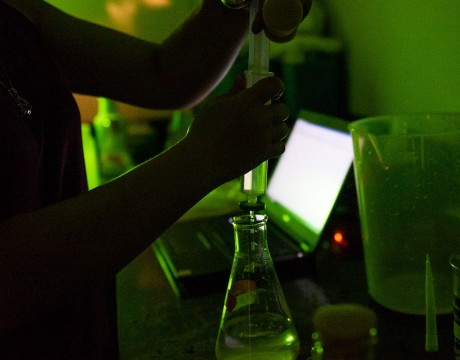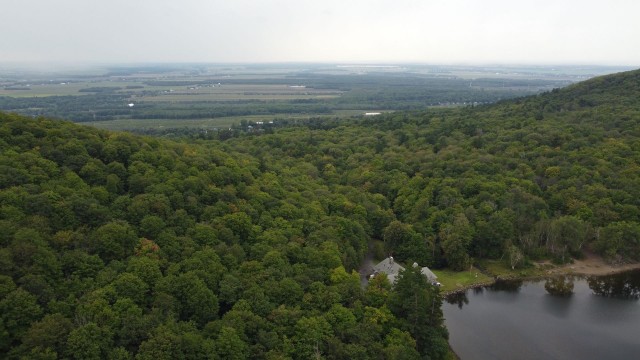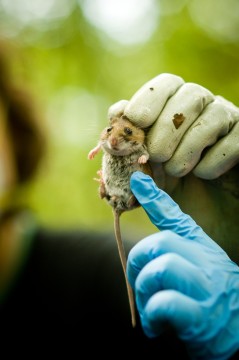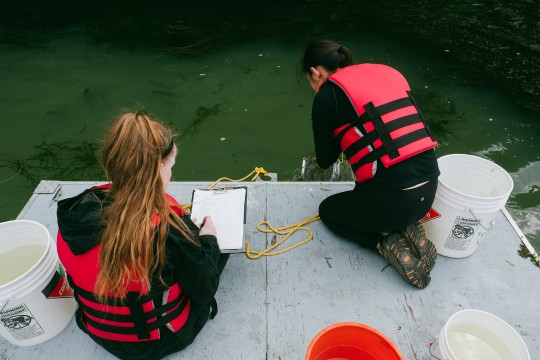
Science is at the heart of our mission.
Gault Nature Reserve is a research station of the Faculty of Science of McGill University. We also manage the Helen and Wilder Penfield research station.
Requesting a research permit
You must request a research permit before starting your fieldwork at Gault Nature Reserve or at Penfield research station. Your permit needs to be renewed every year.
To apply:
- Consult the Research Guide
- Fill out the Research Permit Application
- If you wish to stay overnight, please also fill the Lodging Form
Once your request is submitted, it will be reviewed by the Executive Committee of the Reserve. We will be in touch by email with more information.
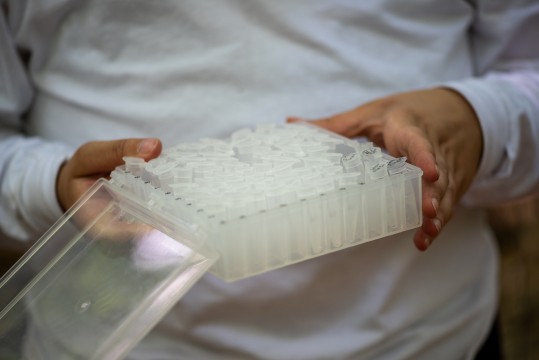
Access to data
- For more information on Mont Saint-Hilaire's biodiversity, consult our species lists.
- For scientific data please contact us at science@reservegault.ca.
Gault Research Awards
We are proud to support research through our Gault Research Awards.
The Gault Research Awards program funds projects at Gault Nature Reserve (Mont-Saint-Hilaire, QC) or at the Wilder and Helen Penfield research station (Austin, QC).
We are currently taking applications for 2026. Learn more about the application process.
Due date: March 20, 2026

Estimating streamwater age at the Gault Nature Reserve
2024 Gault Research Award
Master's project of Liya Miliya, a McGill student supervised by Geneviève Ali. This project started in 2024.
Projects funded by the Gault Research Awards

Combined effects of road salt and eutrophication on aquatic ecosystems
2025 Gault Research Award
Master's project of Catalina Claus, a McGill student supervised by Gregor Fussmann. This project started in 2025.
Detecting heat stress in fish using environmental RNA
2025 Gault Research Award
Doctorate project of Liz Weller, a McGill student supervised by Melanie Cristescu. This project started in 2025.

Ramifying effects of goldfish invasions on pond ecosystems
2024 Gault Research Award
Doctorate project of Emma Schubert, a McGill student supervised by Anthony Ricciardi. This project started in 2024.

Environmental RNA as a non-invasive tool to monitor heatwave impacts on Cypriniformes communities
2024 Gault Research Award
Master's project of Simone Miklosi, a McGill student supervised by Melania Cristescu. This project started in 2024.

Decay and DNA repair of fecal indicator bacteria under sunlight radiation in natural lake water
2024 Gault Research Award
Doctorate project of Greyson He, a McGill student supervised by Stephanie Loeb. This project started in 2024.
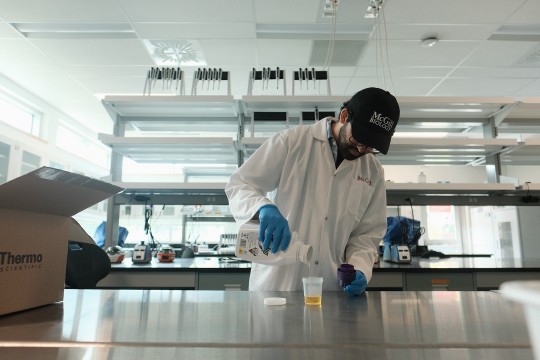
Adaptation to multiple simultaneous stressors in freshwater bacterioplankton
2023 Gault Research Award
Doctorate project of Akhil Sanjay Kholwadwala, a McGill student supervised by Rowan Barrett and Jesse Shapiro. This project started in 2023 at LEAP.
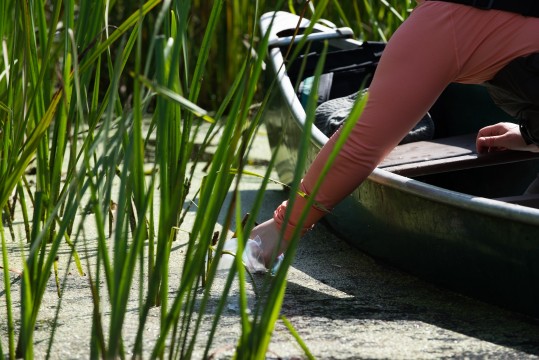
Quantifying the form and function of aquatic plants in Southern Quebec
2023 Gault Research Award
Doctorate project of Lindsay Trottier, a McGill student supervised by Lars Iversen. This project started in 2023 at Gault Nature Reserve and Wilder and Helen Penfield research station.
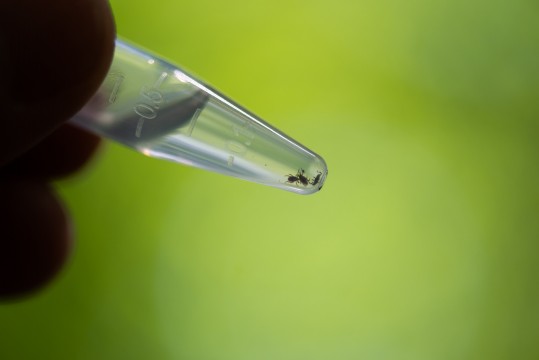
The direct and indirect effects of white-tailed deer on black-legged ticks
2023 Gault Research Award
Master's project of Kari Hollett, a McGill student supervised by Virginie Millien. This project started in 2021.
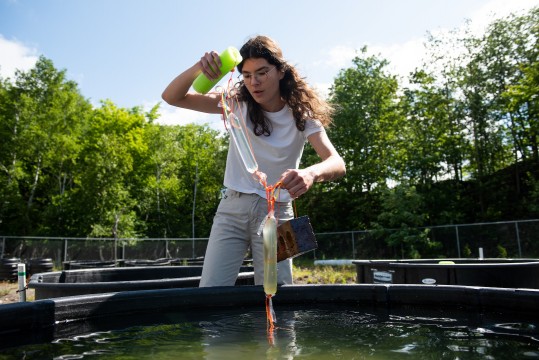
Monitoring the effects of herbicides on bacterioplankton
2022 Gault Research Award
Master's project of Emma Derrick, a McGill student supervised by Jesse Shapiro. This project started in 2022 at LEAP.
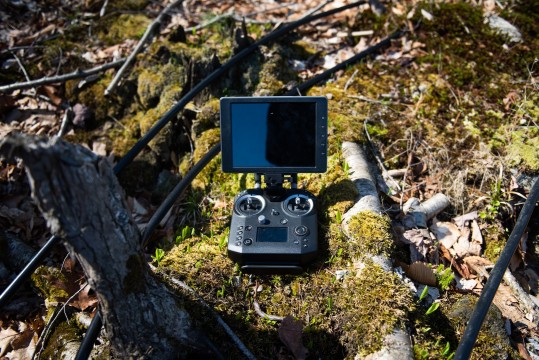
Using drones and thermal imagery to estimate white-tailed deer overpopulation on Mont Saint-Hilaire
2022 Gault Research Award
Undergraduate project of Savannah Bissegger O'Connor, a McGill student supervised by Tim Elrick and Jeffrey Cardille. This project started in 2021.
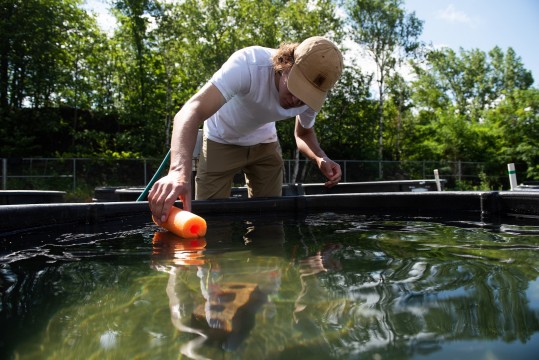
Assessing the impact of surrounding microbial community interactions on rhizobium following herbicide stress
2022 Gault Research Award
Undergraduate project of Maxime Guglielmetti, a McGill student supervised by Rowan Barrett. This project started in 2022 at LEAP.
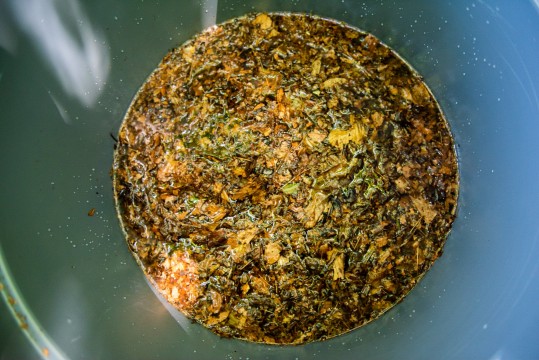
The effect of contaminants on mercury buildup in aquatic food webs
2022 Gault Research Award
Doctorate project of Maude Lachapelle, a McGill student supervised by Irene Gregory-Eaves (McGill University) and Zofia Taranu (Environment and Climate Change Canada). This project started in 2021.
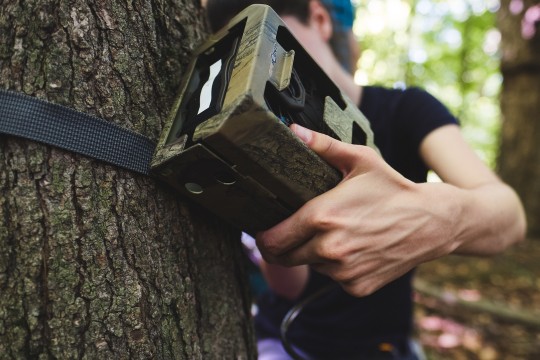
Finding common ground: How hikers influence white-tailed deer space-use patterns in a UNESCO Biosphere Reserve
2019 Gault Research Award
Master's project of Frédérique Truchon, a McGill student co-supervised by Virginie Millien (McGill University) and Martin-Hugues Saint-Laurent (Université du Québec à Rimouski). This project started in 2018.
Research facilities
The special nature of the mountain, its rich scientific history, its proximity to Montreal, its accommodations and its teaching and research facilities make it an exceptional venue for academic and scientific activities.

Adaptable Earth Observation System (AEOS) Laboratory
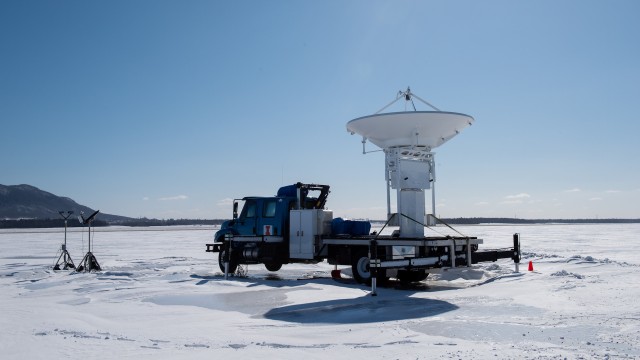
Inaugurated in 2022, the Adaptable Earth Observation System (AEOS) serves as a laboratory for advanced ecological and meteorological research. Learn more.
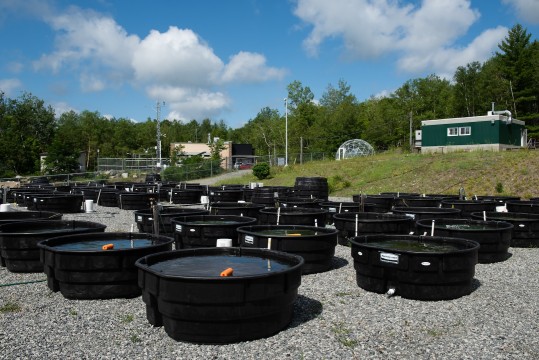
Large Experimental Array of Ponds (LEAP)
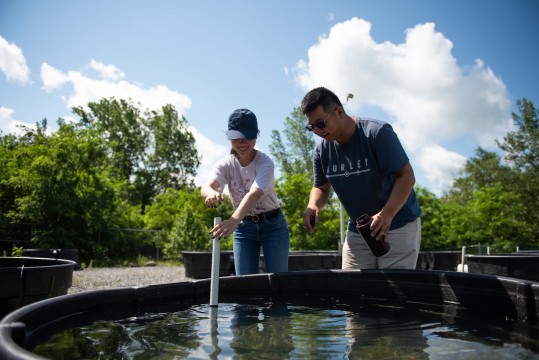
Inaugurated in 2016, the Large Experimental Array of Ponds (LEAP) at Gault Nature Reserve consists of 96 “ponds”, which can be filled with water from Lac Hertel to conduct mesocosm experiments. Learn more.

Stearn teaching laboratory
This laboratory is dedicated to field courses. It was once known at the Stearn Lithological Library. McGill University researchers used it to preserve rock and mineral samples.

Hydrology lab
This laboratory was the old chlorination station for the RIEVR (Régie Intermunicipale de l'Eau de la Vallée du Richelieu). It provides direct access to water from Lac Hertel.
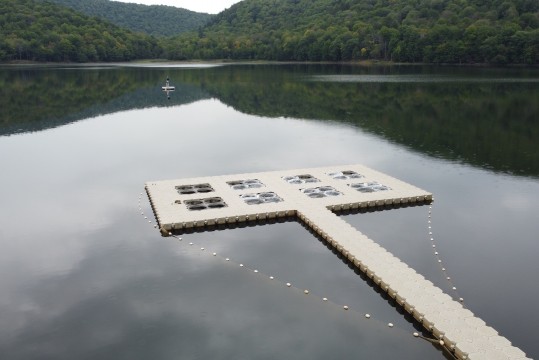
Lac Hertel Mesocosms
An experimental dock used to study aquatic communities. It can contain up to 32 replicates (mesocosms), enabling environmental conditions manipulation without adverse impacts on the natural ecosystem. Learn more.

Fleet of research boats
Gault offers a fleet of boats for aquatic studies and data collection. Oars and electric motors are provided, as well as life vests.

Network of white-tailed deer exclosures
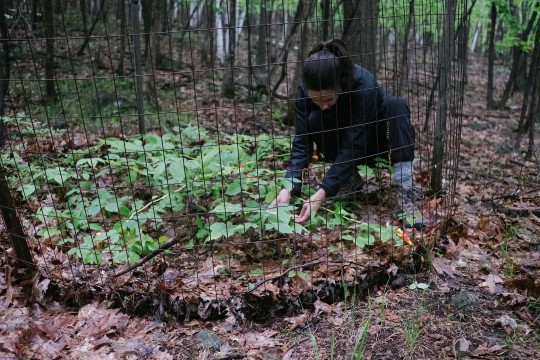
Since 2006, numerous exclosures have been built on Mont Saint-Hilaire. These fenced areas allow for the study of vegetation response to white-tailed deer browsing. Each exclosure is paired with a control plot of the same size. Learn more.
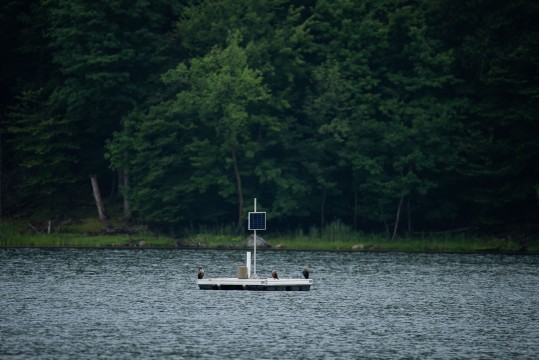
Biological Observation Buoy (BOB)
This buoy takes continuous measures of environmental variables in Lac Hertel water column (temperature, dissolved oxygen concentration, pH, turbidity, etc.) Learn more.
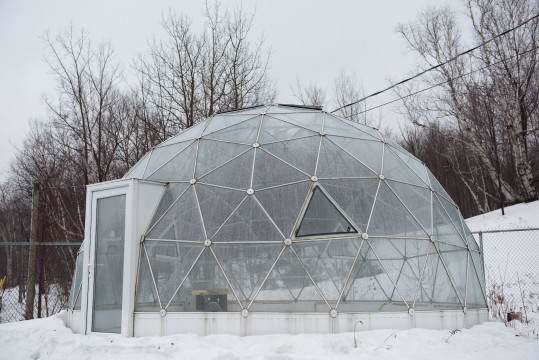
Dome
Experimental pond (6.5 m in diameter and 2 m deep) covered by a geodesic dome for environmental control. This infrastructure enhances the ecological realism of our experiments while retaining very high levels of control and replication.
Want to learn more about our facilities before applying for a research permit? Contact us at science@reservegault.ca.
Bibliography
Consult our bibliography of scientific publications to learn more about past research conducted at Gault.
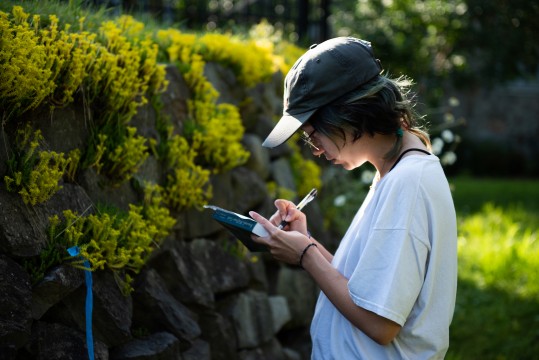
Complete bibliography
The wealth of studies on Mont Saint-Hilaire is reflected in over 400 scientific articles, nearly 100 master's and doctoral theses, more than 50 reports, and approximately 30 chapters or books dedicated to its exploration.
The first scientific studies on Mont Saint-Hilaire date back to 1859, with pioneers such as Sir John W. Dawson, T. Sterry Hunt, and Frère Marie-Victorin exploring its vast forests.
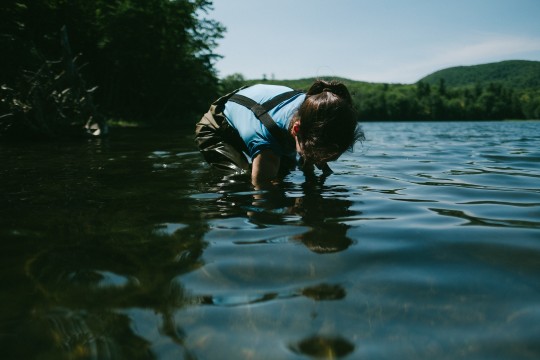
Recent research projects
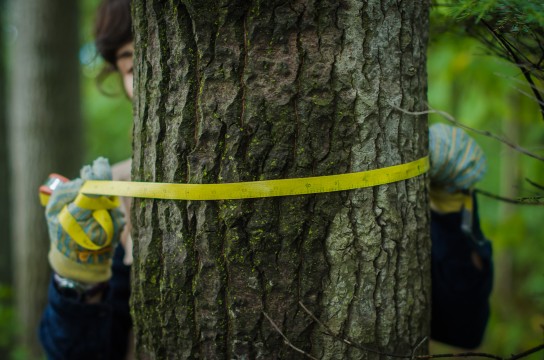
An overview of projects happening at Gault in recent years.